Farewell January

January is behind us and we go into February in good heart. I know that some of you have either had, or have booked, the first vaccination, which is good news. 

Have a look at Hosanna to the Son of David this week. It is in The Oxford Book of Tudor Anthems on page 113. We will examine it in detail next time. I have selected three recordings for you to listen to and compare.The Oxford Camerata is a brisk performance where excitement is generated mainly by the pace. Salisbury Cathedral Choir’s interpretation is a little bit slower and has a slightly detached rhythmic precision. The final one, included for local interest, is a version recorded by Nottingham Cathedral Choir during the first lockdown and before Alex Patterson left for Salford. (You may recognise someone on the bottom row).

For those of you who need to revise the notes here are some learning tracks:

Hosanna – Full
Hosanna – Soprano 1
Hosanna – Soprano 2
Hosanna – Alto
Hosanna – Tenor
Hosanna – Bass 1
Hosanna – Bass 2

These tracks up a semi-tone in the key that we sing them in.


Technical Work this week is on Consonants.  You will need these three sheets to make the best of it: Consonant Guide, Consonant Exercises and Roll the Old Chariot Along

Over the past week or so sea shanties have been in the news. There is one, Roll the old chariot along, at the end of the video. If anyone wishes to make up a verse or two please send them to me. You could record it or just send me the words and I’ll record it – above all have fun!

Here we go again

Here we go on another round of lockdown choir. It was good to see so many of you on zoom last Friday and thanks for the useful suggestions as to the way forward. Here is a recording of most of the meeting. The next choir zoom meeting will be on 12th February.

As time goes on in lockdown with everything progressing slower than we would like the prospect of singing together gets pushed further into the future. Eventually we are looking to prepare a programme for a concert in Stathern Church on either 2nd or 9th October. I’ve looked at our current repertoire and compiled a list from which a programme can be selected. Have a look at it and if you have any other suggestions that could be included let me know.

To get you singing a bit here is the latest in my Technical Work series focussing on vowels including an opportunity to sing the whole of Over the Rainbow. Here is the voice part and an audio recording to practice alongside. (The voice part is a tone lower than the recording.)

Over the Rainbow

Cathy sent this video to me after the discussion about virtual recordings in the meeting. It is pretty impressive and probably just a bit beyond us at the moment!

Have a good week.

SIGNS OF HOPE!!

Chrerry Mistmas

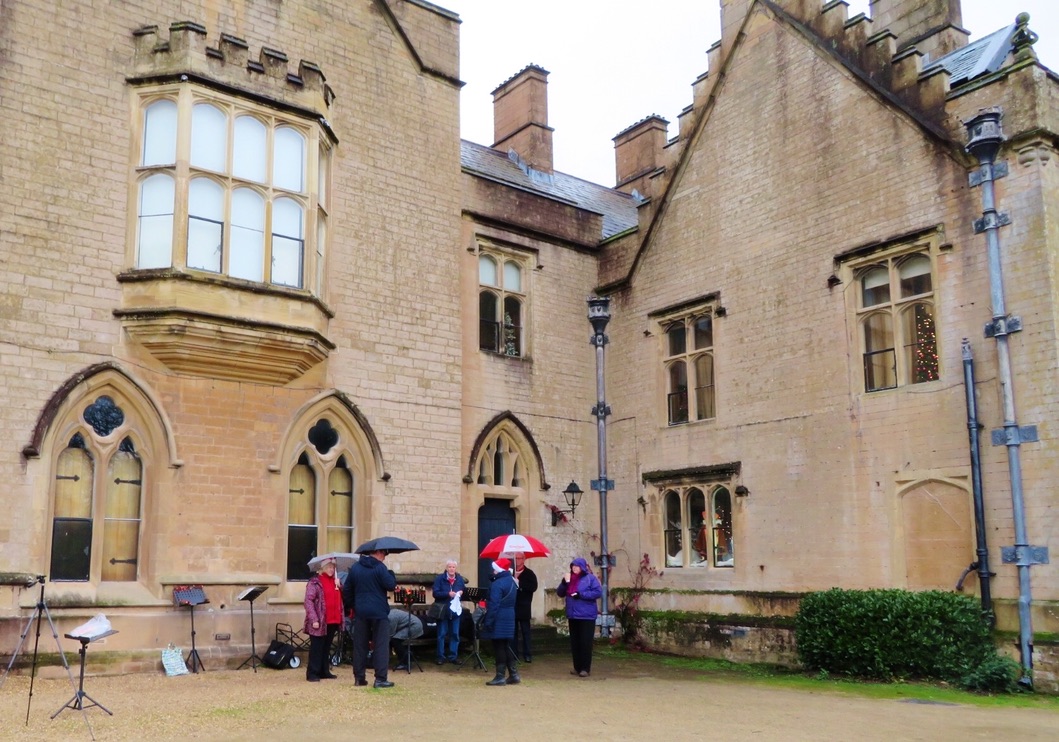
Thank you all for your efforts this year. It has certainly been a unique year with all activity cancelled through the Spring and Summer. Fortunately most of us managed to meet up a few times from October onwards and were able to sing carols outside at Newstead Abbey.

To my knowledge we have all managed to keep virus free and I hope that with the appearance of vaccines it stays thus.

At our last rehearsal on Friday we managed to make a reasonable recording of Light a Candle which I will send to Jan with all our good wishes and fond memories of Mike.

I send you some resources for you to use over the Festive Season. Firstly, our rehearsal on Friday in which we concentrated on quantity over quality!

Rehearsal 18th December

Here is a Christmas playlist. You could show this so that I can conduct your Christmas Bubble in a sing-a-long, just listen to it, or ignore it! (I’ve even included the music of Light a Candle for those haven’t got it). You could also use it (or parts of it) as a Christmas Greeting to whoever you like.

Christmas Playlist Audio:

Light a Candle
Joy to the World
The Angel Gabriel
Coventry Carol
In the bleak midwinter

Light a Candle music

Have a peaceful Christmas and a riotous New Year. We still plan to resume rehearsals on 15th January.

Carols at Newstead Abbey

O sleep thou heaven born infant

A big thanks to those who came to Newstead on Sunday. The weather wasn’t too bad and the sound was really well balanced and well projected. It was much appreciated by everyone, especially me.

There are two videos for you to watch. Firstly, last Friday’s rehearsal; at some point I will extract a couple for recording. Secondly, the Carol Singing at Newstead. The visual quality is of a low resolution to preserve battery life on the camera; also there is a lot of wind and audience noise on the sound. (Some of the audience reactions are quite amusing though.) It does, however, provide a record of the only time that we sang to the public in 2020.

We are meeting for the final time in 2020 this evening. I would like to make as good a recording as we can of Light a Candle; to have a thorough go at With Wondering Awe and sing through Shepherd’s Cradle Song (CC2 page 123); after which we I will throw it open for requests and we’ll finish with We wish you a Merry Christmas (CC1 page 60).

Shepherd’s Cradle Song is pure self indulgence; I have sung or conducted this every year since 1964 and this will be my only chance this year.

Last week we had a little discussion and decided that we will resume weekly rehearsals from Friday, 15th January at Woodborough Village Hall (initially) as long as regualtions and guidance allow.

See you later.

Newstead Abbey here we come

Thank you for a good session last week. We meet again on Friday, 11th December when we shall look at Sussex Carol and Make we joy now in this fest as well as more from the Carol Books.

For those of you singing at Newstead Abbey on Saturday afternoon the arrangements are as follows:

Arrive ready to sing at 2 pm, tell the person on the gate that you are in the choir.Assemble round the back by the door. There is a one way system in the house and that is the exit, there will be room for us there.Dress warm and “seasonal” (the weather forecast isn’t bad) and bring your stand (it will aid social distancing).We will judge whether we sing one “substantial” set or two short ones as we go, finishing before 3.

Here are some resources for all of you. Firstly, a video of last Friday’s rehearsal for you to sing along with. We recorded In the bleak midwinter and The Coventry Carol for you to add your voices to. There is a visual and audio only version of each.

In the bleak midwinter video audio

Coventry Carol video audio

A reminder of how to record:

Listen to the recording through headphones (on high volume); record yourself singing on a computer, tablet or phone and send the recording to me (audio or video but the final version will be audio). I suggest that you don’t listen to the recording before sending.

Here is an extract from a lovely email from Joanne Semple, our Christmas flautist, that I received this week: Hi Nick, as Christmas approaches in this strangest of years I just wanted to say I hope this Advent finds you and the family all well. Christmas will not be the same this year for so many reasons, not least the loss of the NAS Christmas Concert. It has been the start of Christmas for me since I was 12, and a landmark in the O’Brien’s calendar, and having turned 50 this year, who’d have thought we’d have been stopped like this. I do hope the singers are well. Would you please pass on my love and best wishes, and let them know I’ll miss joining you this year. Let’s hope we’ll all be back next year.

John Draper has sent this: Just a few of NAS members may recall that we sang Chichester Psalms under Charles at Radcliffe-on-Trent – it seems a long while ago. This lecture, which I came across, is quite interesting – it covers the background to the Psalms and how they came to be composed. I can only think of John H and Jane P who may have been involved when we performed it  – possibly Ellie, Renwick and/or Rhoda also? Our NIck did the boy solo (we had a cut down arrangement for small choir and minimalist accompaniment0.The lecture is on You Tube on the RSCM channel – an intro is via the link below (or just go straight to You Tube and search for RSCM. Free Weekly Lectures – ‘A Touch of West Side Story’?: Bernstein’s Chichester Psalms | RSCM

Vicky and I attended that performance to audition the choir before applying for the conductor post; I remember that I enjoyed the concert and a convivial hour with Charles in the pub across the road afterwards (Vicky had to drive home!)

See most of you on Friday.

Hosanna! Deo gratias, cantemus!

Looking forward to seeing some of you again in Woodborough Village Hall on Friday.

For those of you attending please remind yourselves of the Risk Assessment and Rehearsal Guidance. The Hall will be open for 7:30 ready to sing at 8. We will be singing carols.

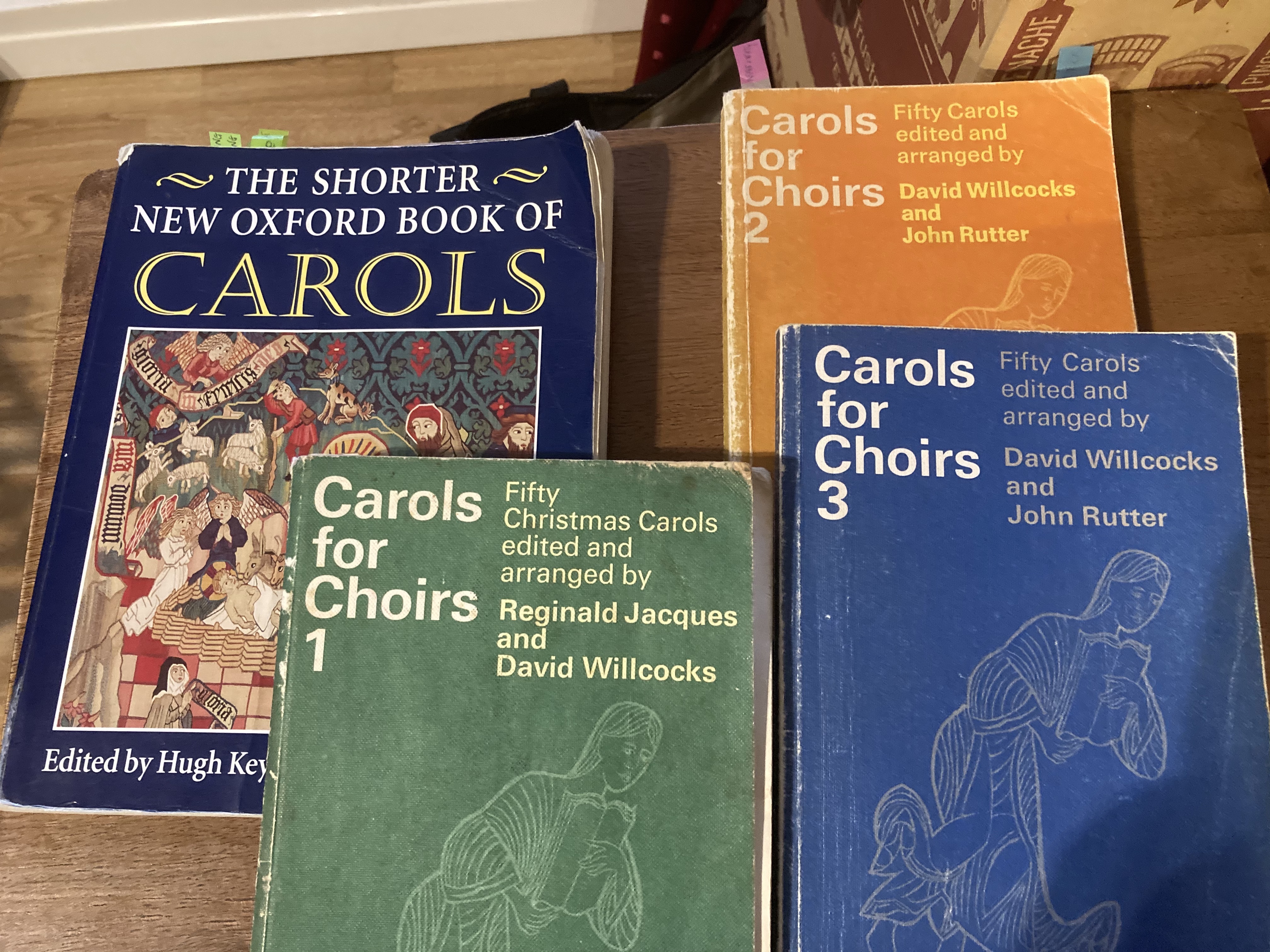
Bring Carols for Choirs books 1 (green), 2 (orange) and 3 (blue) and the New Oxford Book of Carols (large blue) plus my With Wondering Awe. Last year’s Christmas music was not collected in so please hunt out Make we joy now in this fest (Assersohn) and my arrangement of Sussex Carol (On Christmas Night). Let me know if you haven’t got any of this music so that I can either arrange copies for you or not schedule for this week.

The Books that you will need

For those of you not able to be with us I will send out a recording of the rehearsal as before. I am investigating the technology for live streaming rehearsals but today’s vaccination news will hopefully speed up the likelihood of us all safely meeting together.

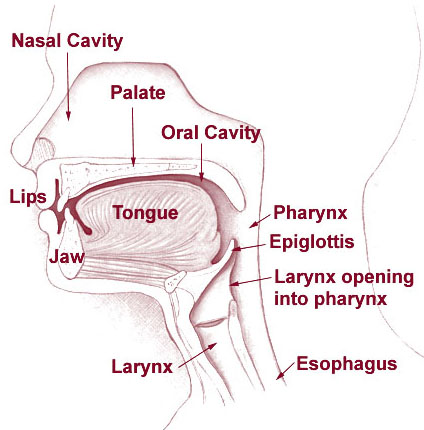
Here is the latest Technical Work video on Vocal Sound and an interesting look at the workings of the vocal folds (not for the squeamish!).

Vocal tract


See some of you on Friday.

Onwards and Upwards

Good to see so many of you at the A.G.M. last week. I thought it worked surprisingly well. Thanks to Rhoda for chairing it efficiently and to Mary, Cathy and Ellie for making up the committee. Onwards and Upwards.

It is disappointing to be back in Tier 3. At the time of writing I am awaiting guidance as to whether we can meet again; there are conflicting messages coming out of the various organisations. Outdoor Carol Singing is, however, approved. I have been in touch with Jo at Newstead Abbey; she would like us to sing but is, like us, awaiting final guidance. I will be in touch once everything is in place.

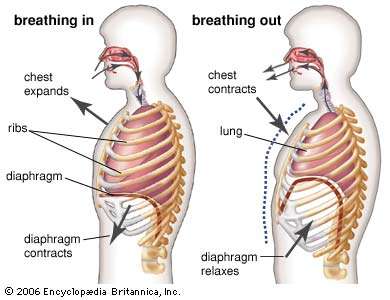
Last time we looked at our Posture; this week we will explore Breathing in this video.


At the A.G.M. I mentioned that I have been writing a carol. Here is the score and some audiofiles for you to learn it with. Please have a look at it so that we can sing it when we meet.

With Wondering Awe Score

Full
Soprano
Alto
Tenor
Bass

If we can’t meet in person next Friday we’ll have a zoom session.

See you soon, keep safe.

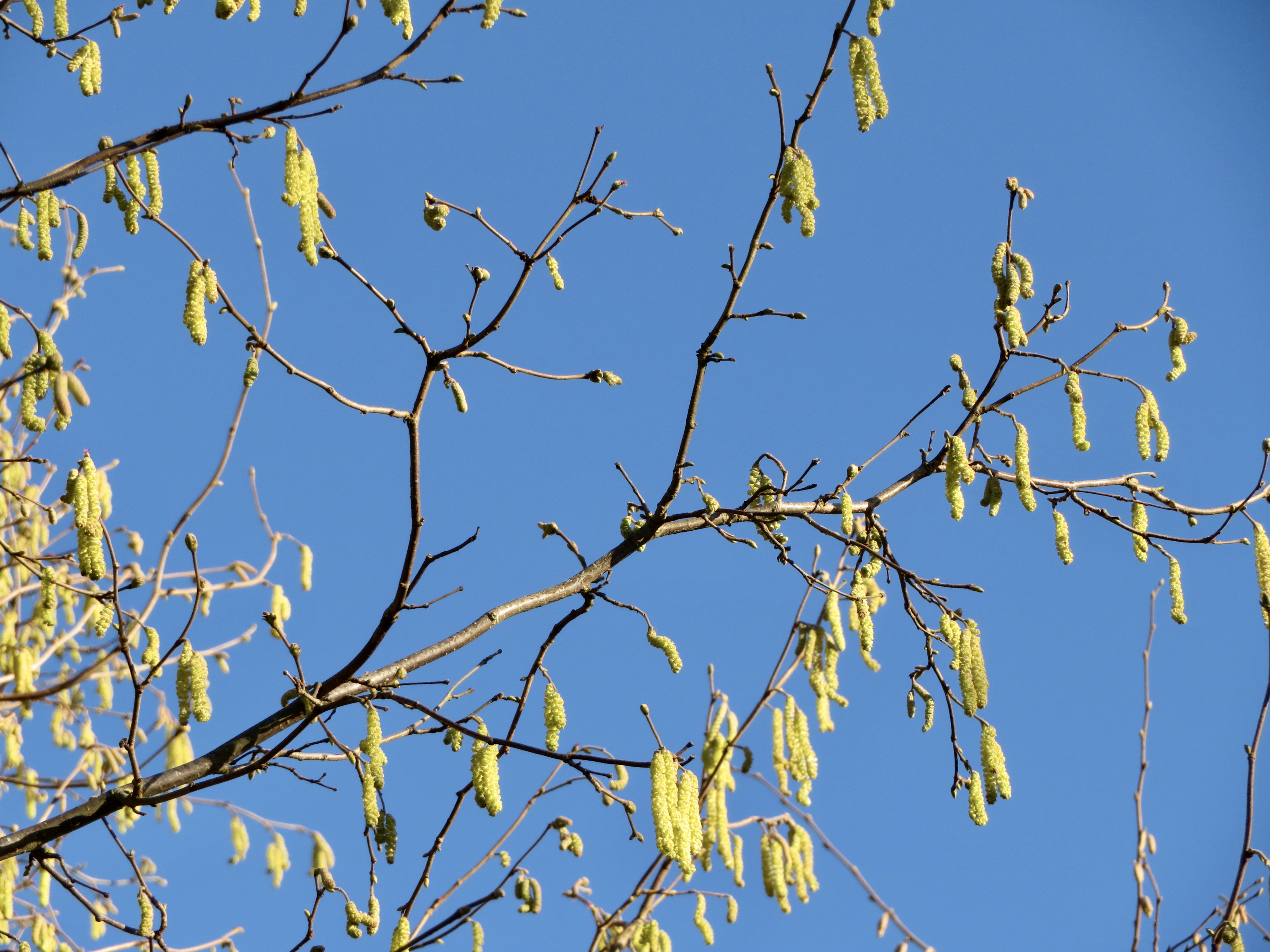
A wood in Autumn sunshine to cheer you up.

Posture and more Ave Verum

It was great to see some of you last Friday. Once again I apologise for the technical mishap. I have since used zoom twice more with no trouble so it augers well for the A.G.M. on 20th November.

Over the next few weeks our technical work will refresh one aspect of singing. The first one this week is on Posture.

After compiling the last Nick’s Notes it occurred to me that we have two further settings of Ave Verum in our repertoire by Mozart and Saint-Saëns which we will look at this week. Neither of these two settings include the O Dulcis section of the text and were composed for liturgical use (i.e. in the context of a church service).

I have selected recordings by German and French choirs respectively so that you can hear pronunciation differences. Latin is an extinct language so each country has developed its own conventions and accent. In this text there are not many moments of controversy (the letters ‘c’, ‘g’ and diphthongs provoke the most). The main variation that I notice is the ‘e’ vowel – the second word verum is a notable example.

Let’s look at Mozart’s setting first:

European Sacred Music page 248.

Listen to this recording.

From Wikepedia: “Mozart composed the motet in 1791 in the middle of writing his opera Die Zauberflöte.[1] He wrote it while visiting his wife Constanze, who was pregnant with their sixth child and staying in the spa Baden bei Wien.[1] Mozart set the 14th century Eucharistic hymn in Latin “Ave verum corpus“. He wrote the motet for Anton Stoll, a friend of his and of Joseph Haydn.[2] Stoll was the musical director of the parish St. Stephan, Baden.[3] The setting was composed to celebrate the feast of Corpus Christi; the autograph is dated 17 June 1791. (The Feast of Corpus Christi falls on the Thursday following Trinity Sunday, and in 1791 was observed on June 23.) The composition is only forty-six bars long and is scored for SATBchoir, string instruments, and organ. Mozart’s manuscript contains minimal directions, with only a single sotto voce marking at the beginning. The motet was composed less than six months before Mozart’s death.[2] It foreshadows “aspects of the Requiem such as declamatory gesture, textures, and integration of forward- and backward-looking stylistic elements”.[4] While the Requiem is a dramatic composition, the motet expresses the Eucharistic thoughts with simple means, suited for the church choir in a small town.[2][5] “

It is a simple, homphonic composition that is basically a harmonised melody. It would work as a song with just the soprano part and accompaniment. As is typical with Mozart there is plenty of room for expressive, lyrical singing.


The Saint-Saëns setting is in the purple booklet with Elgar Happy Eyes and Serendade or here.

Listen to this recording.

Saint-Saëns lived from 1836-1921. Like Mozart he was a child prodigy. He was organist at La Madeleine church for twenty years from 1858. It is thought that this motet was written about 1860. There are similarities to the Mozart setting in that it is homophonic, designed to be accompanied (although it does work unaccompanied) and could be an accompanied soprano solo.
I think that it is interesting to compare these settings of the same text spanning 300 years or so. It is difficult for me to pick a preference as they are all equally effective and written by composers who worked for the church but had many other musical irons in the fire. Mozart is more well known for his operas and symphonies; Saint-Saëns for orchestral music and Byrd for keyboard pieces. Which one is your favourite? (Answer in the comments below).

See you next week at the A.G.M.

Byrd Ave Verum

Following last week’s live rehearsal we are going to revise Byrd Ave Verum. It is one of our standard repertoire pieces that we haven’t done for a while; at least four of you haven’t sung it with us. As you know I have fondness for polyphonic music. In my opinion Byrd is the most skilful of the English Tudor composers and this little motet is a fine example of his skill.

Read the text and its translation.

Ave, verum corpus natum de Maria Virgine:
vere passum, immolatum in cruce pro homine:
cuius latus perforatum unda fluxit sanguine:
esto nobis praegustatum, in mortis examine.
O dulcis, O pie, O Jesu Fili Mariae. Miserere mei. Amen. 
Hail the true body, born of the Virgin Mary:
You who truly suffered and were sacrificedon the cross for the sake of man.
From whose pierced flank flowed water and blood:
Be a foretaste for usin the trial of death.
O sweet, O merciful, O Jesus, Son of Mary.
Have mercy on me. Amen.

Now watch and compare this performance by the Tallis Scholars with this one by The Sixteen. They are quite different; which is your preference? I reveal mine at the end of the rehearsal video.

Here is a short analysis:

The text is a Gradual for the Feast of Corpus Christi (the Body of Christ). Corpus Christi is commemorated on the Thursday after Trinity Sunday and is thanksgiving for Holy Communion. This text is a personal prayer addressed to Christ. It needs to sung intimately and reverently but not without emotion.

Unusually, Byrd doesn’t set the text as an unbroken whole. The five phrases of the prayer are separated by rests. I wonder whether Byrd envisaged the rests to be rhymical or more fluid, general pauses. It would certainly raise eyebrows to sing them as such and would draw attention to the structure – we’ll try it sometime.

I love that fact that when you listen most of it sounds homophonic (as if all the voices are singing the same words at the same time). Byrd starts and finishes the phrases together but, very subtly after two or three syllables at least one of the voices diverges. In the first phrase it is the tenor and then the bass; the second, the tenor and alto; the third, the soprano followed by three bars of imitation and in the fourth, the tenor then alto and bass.

The repeated section (bars 29-43) deals in threes; an oblique reference to the Holy Trinity – Corpus Christi falls in the week after Trinity Sunday. You have the three invocations – O sweet, O merciful, O Jesus; three repetitions of O Jesu fili Mariae (soprano and bass bar 30, alto bar 31 and tenor bar 32) then nine (3×3) imitations of Miserere mei from bar 36 onwards – alto and tenor (36), bass (37),soprano (37), alto (38), tenor (38), alto (39), soprano (40), bass (40) and tenor (41). The Kyrie eleison  (Lord, have mercy) in the Mass has nine repetitions and the Agnus Dei also has three phrases. Reminder: Corpus Christi is a thanksgiving for the Eucharist.

Ave verum maybe a short motet but there is much symbolism and meaning in every phrase. Look at the way that the word fluxit (flows) is set with an imitating downward motif; the word perforatum (pierced) starts suddenly and contains one of the few discords (bar 18 beat 1) in the piece. Notice the moments when important words are repeated or there is a bit of melisma – for the sake of man (12-15); the trial of death (26-8); son of Mary (33-5); have mercy on me (36-43). Bear in mind that Byrd was a devout Catholic. He had to worship in secret, hiding from the newly protestant authorities.

Please watch and participate in this video rehearsal. You will need The Oxford Book of Tudor Anthems and this sheet of technical exercises.

When we next rehearse this live we’ll try and put it all together.

Another sing?

I hope that you are all well.

Thanks to all this who came to Woodborough on 9th October. Nine of us were present (Catherine, Cathy, Rhoda, Mary, Ruth, Vicky, Marguerite, Renwick and me); we had a good, socially distanced sing. We were well spaced out and most sang wearing masks; the fire door and windows were open and everyone followed the rules to the letter. I felt very safe; my impression was that it wasn’t as uncomfortable as feared and the singing was pretty good in spite of my bass fumbling. I recorded the rehearsal; an edited version can be viewed here. Those who weren’t there can use it as an opportunity to sing along.

For those wanting to sing we will have another meeting this Friday. A Muzudo invitation will follow later today.

Here is the current advice from the Association of British Choral Directors and Making Music:

Following the new three-tier system announcement in England, the government’s performing arts guidance has now been updated. It confirms that choral activity can usually continue at all levels, provided there is no mingling at all at the two higher levels, but also depending on local restrictions which may be added.

The relevant paragraph from the Government Performing Arts guidance:

Confirmed that in a COVID-secure venue or public outdoor place, non-professional performing arts activity, including choirs, orchestras or drama groups can continue to rehearse or perform together where this is planned activity in line with the performing arts guidance and if they can do so in a way that ensures that there is no interaction between separate and distinct groups of no more than 6 (In Medium areas and outdoors) or individual households (in High and Very High areas). If an amateur group is not able to ensure that no mingling takes place between these sub-groups (depending on Local Covid Alert Level restrictions) – including when arriving at or leaving activity or in any breaks or socialising – then such non-professional activity should not take place. See Local Covid Alert Level guidance (Medium, High, Very High) for more details on group size.

…and the Covid Alert Level Guidance for High:

Other activities, such as organised indoor sport, indoor exercise classes and other activity groups, can only continue provided that households or support bubbles do not mix. Where it is likely that groups will mix, these activities must not go ahead.

Your committee met last Friday mainly to discuss the A.G.M. which will be held on Friday, 20th November, hopefully “live” but with a zoom link for those who cannot be with us in person.

This Friday please bring Oxford Book of Tudor Anthems, Feel the Spirit, European Sacred Music, English Romantic Part Songs, Be Thou My Vision, Goin’ Home, This is my Father’s World, The Glory of Love, Nada te turbe.

The plan is that we meet fortnightly. In November we usually start Christmas repertoire. My plan is that on 6th, 20th November and 4th December we will rehearse and record a number of carols that can then be disseminated to our audience over the Christmas period. Anyone not present will have the opportunity to add their voice to the recordings if they wish. We will also look for an opportunity to sing carols outdoors in December. How does that sound?

Hope to see some of you on Friday.